
Content Strategy Examples: 7 Practical Frameworks for Planning Editorial Calendars, Audience Research, and Content Distribution
Plan content around people, not random post ideas. That is the whole game. Content Marketing Institute reported that 71% of B2B marketers said content marketing became more important to their company in the last year [source: Content Marketing Institute]. So yes, a simple content strategy is not “nice to have.” It keeps your calendar from turning into a junk drawer.
TLDR: Use a few repeatable frameworks to plan what to publish, who it is for, and where it should go. For example, a small SaaS team could publish 4 blog posts, 8 LinkedIn posts, and 2 email tips per month from one topic cluster. If their demo page gets 1,000 visits and converts at 3%, even a small traffic lift can mean real leads. Start with audience pain, then build the calendar, then distribute like you mean it.
1. The Audience Pain Map
This is the best place to start. Not keywords. Not “what should we post?” Start with pain.
Make a table with four columns:
- Audience: Who has the problem?
- Pain: What annoys them?
- Trigger: What makes them search?
- Content idea: What can help?
Example:
- Audience: Marketing manager
- Pain: The blog calendar is empty again
- Trigger: Monday meeting panic
- Content idea: “30 Blog Ideas for a B2B Team”
It drives me a little mad when teams skip this step. Then everyone argues over topics based on vibes. Pain maps stop that mess.
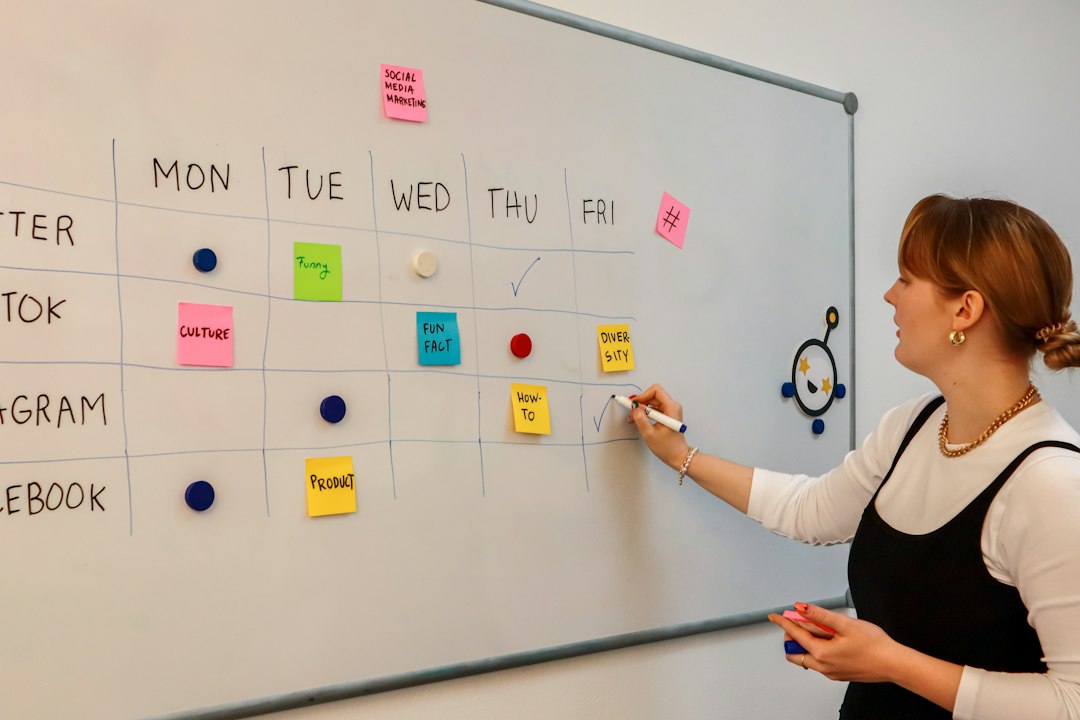
2. The Pillar and Cluster Calendar
This framework is clean and easy.
Pick one big topic. That is your pillar. Then build smaller posts around it. Those are your clusters.
For example:
- Pillar: Content strategy guide
- Cluster: Editorial calendar examples
- Cluster: Audience research questions
- Cluster: Content distribution checklist
- Cluster: Blog post brief template
Now your editorial calendar has shape. It is not just “publish something on Thursday.” It is a mini content system.
3. The 70, 20, 10 Mix
This one keeps your calendar balanced.
- 70% proven content: Topics you know your audience wants.
- 20% fresh angles: New formats, opinions, or stories.
- 10% experiments: Weird stuff. Risky stuff. Fun stuff.
So if you publish 10 pieces each month, make 7 safe, 2 fresh, and 1 bold.
This stops two bad habits. Playing it too safe. Or tossing spaghetti at the wall every week.
4. The Funnel Board
Not every piece of content should sell. Please do not make every blog post a sales pitch. People can smell it.
Use a funnel board instead:
- Top: Helpful content for broad problems.
- Middle: Comparison posts, templates, webinars, guides.
- Bottom: Case studies, demos, pricing help, buyer guides.
Example:
- Top: “How to Plan a Monthly Content Calendar”
- Middle: “Content Calendar Template for Small Teams”
- Bottom: “How Our Tool Cuts Planning Time by 40%”
Now each post has a job. Some attract. Some teach. Some help buyers pick you.
5. The Content Atomization Machine
This sounds fancy. It is not.
Take one big content piece. Break it into smaller parts.
A single webinar can become:
- 1 blog post
- 5 short videos
- 7 social posts
- 1 email newsletter
- 3 quote graphics
This is perfect for small teams. You do not need more ideas. You need better reuse.

6. The Channel Fit Score
Distribution is where good content often goes to die. Sad. Also common.
Before you publish, score each channel from 1 to 5:
- Audience fit: Are your people there?
- Format fit: Does the content match the channel?
- Effort: Can your team handle it?
- Business value: Can it bring leads, sales, or trust?
If LinkedIn scores 18 out of 20 and TikTok scores 9 out of 20, the choice is easy. Post where the content has a real shot.
Honestly, it feels like some tools add three extra clicks just to schedule one post. That gets old fast. Keep your system simple enough that people use it.
7. The Monthly Retro Loop
This is the “don’t repeat dumb mistakes” framework.
At the end of each month, review four numbers:
- Traffic: What got visits?
- Engagement: What got clicks, saves, replies, or shares?
- Conversion: What led to signups or sales calls?
- Effort: What took too long?
Then ask:
- What should we do again?
- What should we stop?
- What should we update?
- What should we test next?
This turns your content strategy into a loop. Plan. Publish. Check. Fix. Repeat.
A Simple 30-Day Example
Here is a basic plan for one month:
- Week 1: Interview 5 customers. Build a pain map.
- Week 2: Pick 1 pillar and 4 cluster topics.
- Week 3: Publish 2 posts and split them into social content.
- Week 4: Review results and adjust next month.

The best content strategy is not huge. It is clear. It tells you who you are helping, what you are making, when it goes live, and where it gets shared. Start with these seven frameworks. Keep the ones that work. Drop the ones that feel like office theater.