
How an AI SoC Platform Powers Next-Generation Devices
An AI SoC platform powers next-generation devices by placing compute, memory, connectivity, sensors, and AI acceleration on one tightly integrated chip. This lets phones, robots, cameras, vehicles, wearables, and industrial machines process data close to the source. The result is faster response, lower power use, stronger privacy, and less dependence on cloud servers.
TLDR: An AI system on chip gives smart devices the hardware needed to run machine learning tasks locally. For example, a security camera using an AI SoC can detect a person in under 50 milliseconds while sending up to 80% less video data to the cloud. That means lower bandwidth costs, quicker alerts, and fewer privacy risks. It also helps battery-powered devices last longer because they avoid constant wireless uploads.
Why AI SoC platforms matter now
Next-generation devices are expected to understand speech, detect objects, read gestures, track health signals, and react in real time. A normal processor can handle some of this work, but it often burns too much power or responds too slowly. An AI SoC changes that by combining several specialized parts into one platform.
A typical AI SoC may include:
- CPU cores for general control tasks and operating system logic.
- GPU cores for vision processing, graphics, and parallel workloads.
- NPU or AI accelerator for neural network inference.
- DSP for audio, sensor, and signal processing.
- Memory controllers that keep data moving quickly.
- Wireless modules for Wi Fi, Bluetooth, 5G, or low power networks.
- Security engines for encryption, secure boot, and identity protection.
Instead of pushing every task through one processor, the platform sends each job to the best block. Speech cleanup may go to the DSP. Object detection may run on the NPU. App logic may stay on the CPU. This division saves energy and cuts lag.
Local AI makes devices faster
Speed is one of the strongest reasons to use an AI SoC. A cloud-based AI device must collect data, compress it, send it across a network, wait for processing, then receive the result. That may be fine for a photo filter. It is not fine for a delivery robot crossing a street.
With an AI SoC, the device can make many decisions on the spot. A drone can adjust its path. A car camera can detect lane markings. A factory sensor can spot a faulty bearing before it breaks. A hearing aid can reduce background noise as the sound arrives.
The catch is that software stacks can still be annoying. Engineers may spend days converting models from PyTorch or TensorFlow into chip-specific formats. Sometimes a model that runs in 12 milliseconds on a laptop takes 38 milliseconds on the target board because one layer falls back to the CPU. That kind of delay is small on paper and painful in a real product.
Power efficiency is the real breakthrough
Next-generation devices are smaller, thinner, and often battery powered. They do not have room for hot chips or large cooling systems. AI SoCs solve this by using accelerators built for math operations common in machine learning, such as matrix multiplication and convolution.
A well-designed NPU can perform trillions of operations per second while using only a few watts. Some wearable chips work in milliwatt ranges for always-on sensing. This is how earbuds can detect voice commands, watches can monitor heart patterns, and smart home sensors can stay awake for months.
Power savings also reduce heat. That matters in phones, glasses, medical monitors, and compact robots. Heat hurts user comfort. It also shortens component life. A cooler device feels better and lasts longer.
Privacy improves when data stays on the device
AI SoCs help keep sensitive data local. A smart camera does not need to stream every frame to a server if it can detect people, pets, parcels, or vehicles on the device. A health tracker does not need to upload raw biosignals for every simple alert. A voice assistant can wake on a local keyword before any data leaves the device.
This local processing reduces exposure. It also helps companies meet stricter data rules. Less raw data in transit means fewer points of failure. For users, it means smart features can run without constant cloud contact.
Better sensors need better chips
Modern devices collect huge amounts of data. Cameras capture high-resolution video. Radar sensors track motion. Microphones listen in noisy rooms. LiDAR maps depth. Industrial sensors measure vibration, pressure, heat, and flow.
An AI SoC does more than run a model after data arrives. It can also clean, fuse, compress, and prioritize sensor data. Sensor fusion is especially useful. A robot may combine camera images, depth data, wheel movement, and inertial readings to understand its position. A car may combine radar, cameras, and ultrasonic sensors for safer parking and driver assistance.

What makes an AI SoC platform different from a single chip
The word platform matters. Hardware alone is not enough. A strong AI SoC platform includes development boards, model conversion tools, software libraries, drivers, operating system support, and security updates.
Product teams need more than raw TOPS numbers. They need stable toolchains. They need documentation that does not feel like a scavenger hunt. Honestly, it feels like some vendors still treat setup guides as optional, which can add 10 or 20 wasted minutes to every build-test cycle.
A complete platform usually provides:
- AI model optimization for pruning, quantization, and compression.
- Runtime engines that schedule tasks across the CPU, GPU, DSP, and NPU.
- Reference designs for cameras, robotics, automotive systems, and IoT devices.
- Security frameworks for trusted execution and encrypted updates.
- Power management tools that tune performance for heat and battery life.
Key device categories shaped by AI SoCs
Smartphones use AI SoCs for camera enhancement, translation, gaming, noise reduction, and battery control. Many photo features now happen instantly because the chip processes multiple frames before the user even sees the final image.
Cars use them for driver monitoring, parking assistance, object detection, infotainment, and cabin sensing. Safety systems need fast local decisions, even when network service is poor.
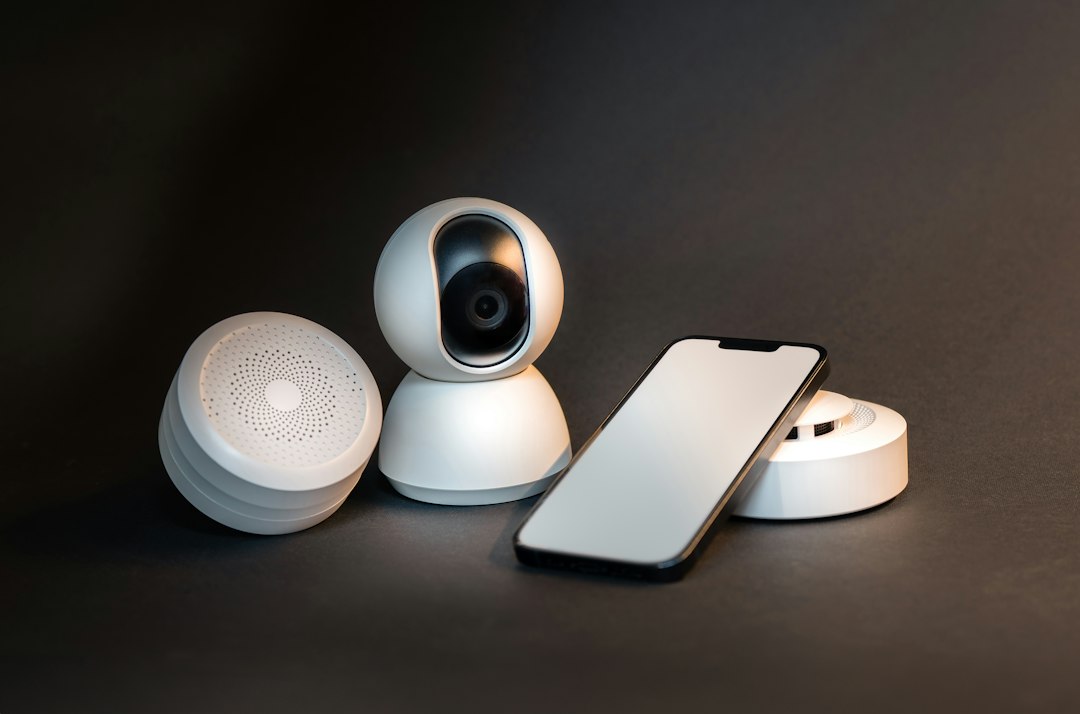
Smart cameras use them to detect events instead of recording endless footage. This cuts storage needs and makes alerts more useful.
Industrial machines use AI SoCs for predictive maintenance and quality inspection. A production line camera can reject damaged parts in real time instead of waiting for manual checks.
Wearables and medical devices use them to monitor signals continuously while protecting battery life. This supports fall detection, heart rhythm alerts, sleep tracking, and stress monitoring.
The business impact
AI SoCs change both product design and cost structure. Local AI can reduce cloud bills because fewer raw files need storage or analysis. It also improves service quality in areas with weak networks. Devices keep working when connectivity drops.
For manufacturers, an AI SoC can shrink the board, reduce component count, and speed manufacturing. One integrated platform may replace separate processors, connectivity chips, security modules, and sensor hubs. That can lower power draw and simplify testing.
The tradeoff is planning. Teams must choose the right NPU capacity, memory bandwidth, tool support, thermal limit, and software roadmap early. A weak choice can trap a product for years.
What comes next
AI SoC platforms are moving toward larger local models, better multimodal processing, and more secure edge learning. Future devices will process sound, images, motion, and text together. They will also personalize behavior without sending every detail to a server.
The strongest products will not be the ones with the biggest chip on a spec sheet. They will be the ones that balance speed, battery life, privacy, software maturity, and cost. That balance is what makes an AI SoC platform so central to next-generation devices.
FAQ
- What is an AI SoC platform?
- An AI SoC platform is an integrated chip and software system built to run AI tasks on devices. It often includes a CPU, GPU, NPU, memory, connectivity, security, and developer tools.
- How does an AI SoC differ from a regular processor?
- A regular processor handles broad computing tasks. An AI SoC adds specialized blocks that run machine learning workloads faster and with less power.
- Why is local AI better than cloud AI for some devices?
- Local AI reduces delay, saves bandwidth, improves privacy, and keeps features working when network access is poor.
- Which devices benefit most from AI SoCs?
- Phones, cameras, robots, cars, wearables, medical monitors, drones, and industrial sensors all benefit from efficient local intelligence.
- Is TOPS the only metric that matters?
- No. TOPS shows peak AI math capacity, but memory speed, software support, power use, heat, model compatibility, and security matter just as much.